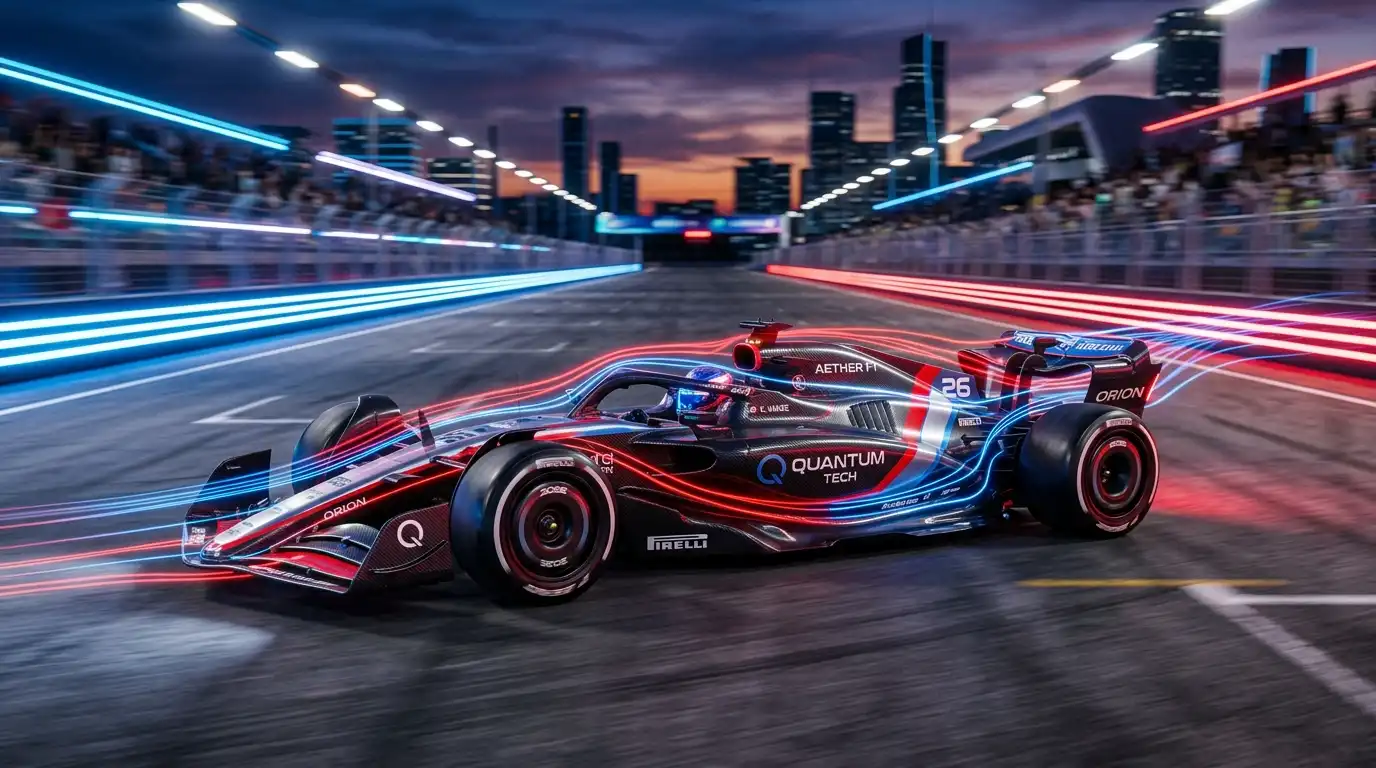
Formula 1 is entering its most radical era of transformation in a generation. As we move through April 2026, the paddock is buzzing with talk of active aerodynamics, sustainable fuels, and a near 50-50 power split between the internal combustion engine and electrical systems. However, behind the scenes, a much quieter—and heavier—war is being waged. The 2026 F1 weight limit regulations have set a target that many senior engineers are calling “brutally ambitious.”
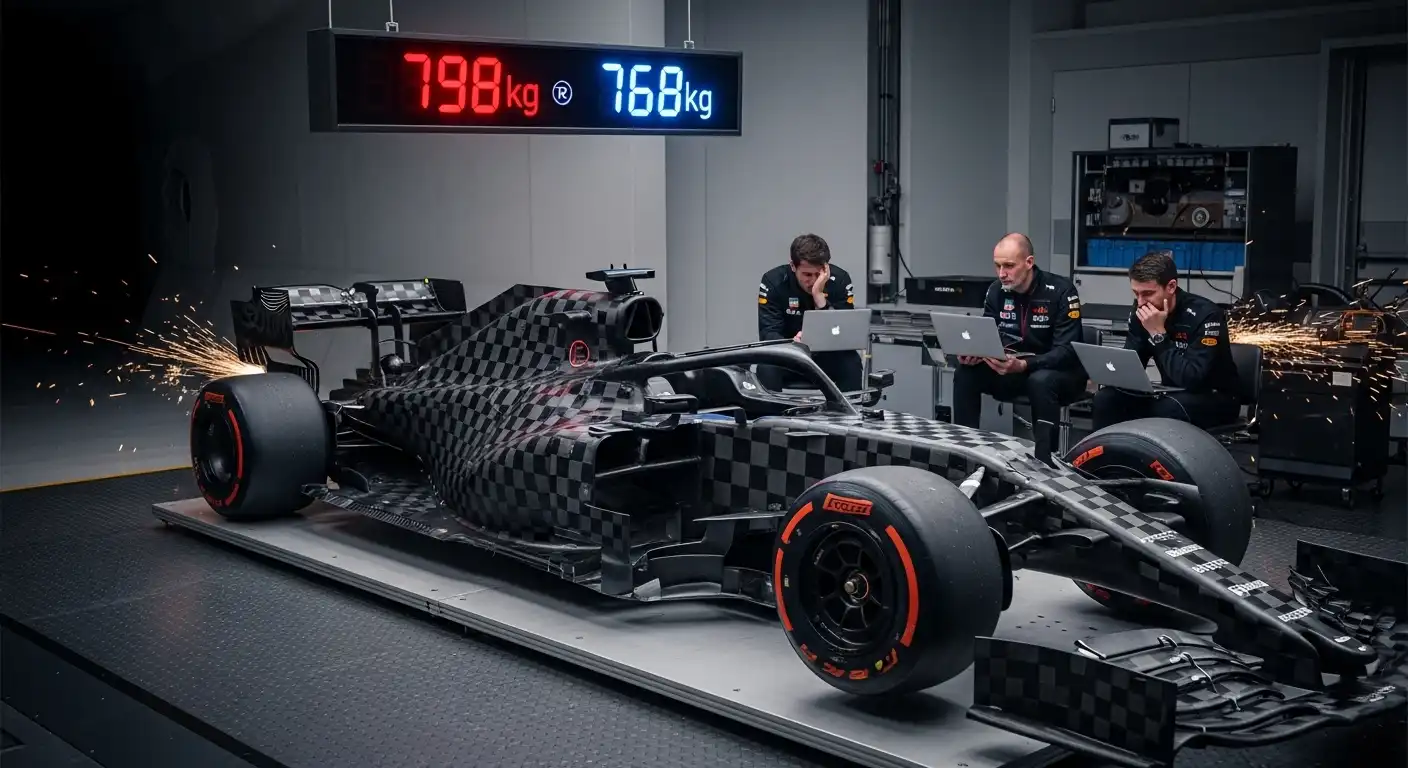
The FIA’s goal for 2026 was clear: create “nimble” cars. To achieve this, the regulations mandated a 30kg reduction in minimum weight, dropping the limit from the 798kg of the previous era to a lean 768kg. But as teams move from simulations to physical prototypes, a harsh reality is setting in. Between the massive batteries required for the new Power Units and increased safety structures, hitting that 768kg mark is becoming the biggest technical crisis of the season.
The 30kg Struggle: A Math Problem That Doesn’t Add Up
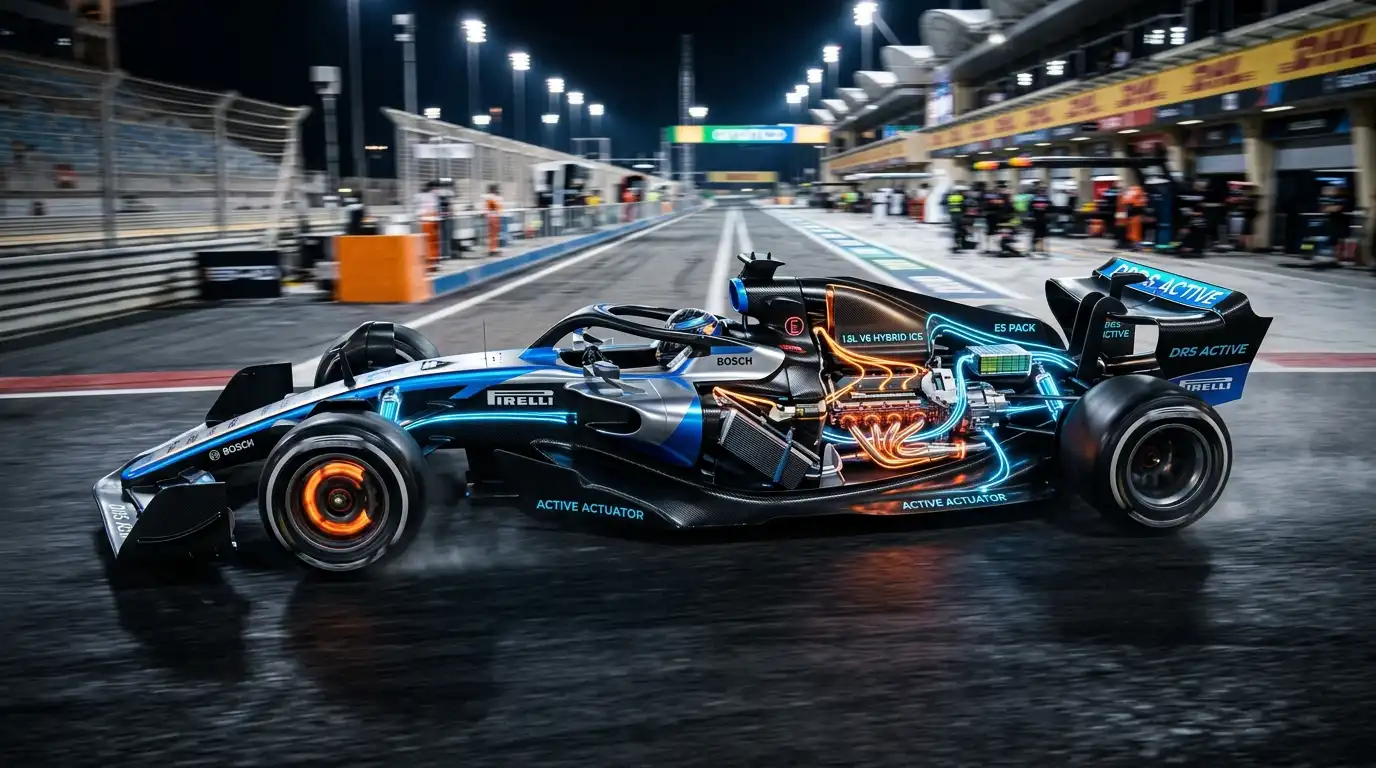
 On paper, the weight reduction makes sense. The 2026 cars are smaller—the wheelbase has been trimmed by 200mm and the width reduced by 100mm. Theoretically, a smaller chassis should weigh less. However, the new Power Units (PUs) have thrown a metaphorical lead weight into the design office. The removal of the MGU-H (Motor Generator Unit – Heat) was supposed to simplify things, but the massive increase in MGU-K (Kinetic) output to 350kW requires a significantly larger and heavier battery pack.
Williams Team Principal James Vowles recently warned that “most 2026 Formula 1 cars will start the new era overweight.” The simple fact is that while the car’s “skin” has shrunk, its “organs” have become denser. Engineers are finding that the weight saved by a shorter chassis is being immediately consumed by the cooling requirements and electrical hardware of the 2026 PU.
Naked Carbon: The Visual Cost of the Weight War
If you’ve noticed the 2026 grid looks a bit “darker” than usual, there is a technical reason for it. Paint is heavy. A full livery can add upwards of 3kg to 5kg to a car. In a world where 10kg equals roughly three-tenths of a second per lap, paint is a luxury that teams can no longer afford.
We are seeing a trend of “naked” carbon fiber, where teams leave as much of the car as possible unpainted to shave off every possible gram. This isn’t just an aesthetic choice; it’s a desperate survival tactic. In the 2026 cost-cap environment, it is far cheaper to leave a car unpainted than it is to redesign a gearbox casing out of exotic, lightweight alloys.
The “Super Clipping” and Safety Dilemma
The weight crisis isn’t just about lap times; it’s affecting the racing product. Early races in 2026 have highlighted issues with “super clipping”—where the software algorithms cut electrical power abruptly to favor battery recharging. Because the cars are struggling to manage their weight and energy deployment, we are seeing significant speed differentials on straights, leading to dangerous closing speeds between cars.
Furthermore, the FIA has actually increased the load requirements for the roll hoop (from 16g to 20g) and introduced a two-stage impact structure for the nose cone. While these are vital for driver safety, they add structural mass. Teams are essentially being asked to build a car that is both stronger and lighter—a classic engineering paradox that is stretching R&D budgets to their limits.
Driver Impact: The Return of the “Tall Driver” Disadvantage?
 To provide some relief, the FIA has increased the minimum driver weight allowance from 80kg to 82kg. This was intended to prevent taller drivers from having to maintain unhealthy body weights to help the car meet the limit. However, if the car itself is already 15kg over the 768kg minimum, every gram a driver carries still matters.
Drivers like Nico Hülkenberg and Esteban Ocon, who sit on the taller side of the spectrum, are once again expressing concerns that the 2026 F1 weight limit regulations might inadvertently penalize their natural physiology. If a team can’t get the car down to the limit, the easiest “variable” to change is the human inside it, which reignites a long-standing ethical debate in the sport.
Conclusion: Will the FIA Blink?
As we approach the mid-point of the 2026 season, the pressure is mounting on the F1 Commission to intervene. There are already talks of an emergency “weight hike” to 775kg or 780kg to prevent teams from spending themselves into bankruptcy trying to chase an impossible target. For now, the weight crisis remains the invisible enemy in the paddock—a battle won in grams, but lost in seconds.
At Auto Sport Info, we’ll be watching the scales just as closely as the stopwatches at the next Grand Prix. The team that solves the weight puzzle first won’t just have a faster car; they’ll have the championship advantage in this new era.
What Do You Think?
Should F1 prioritize the “nimble car” concept at all costs, or is it time to admit that modern hybrid technology simply requires a heavier minimum weight? Join the conversation in the comments below!