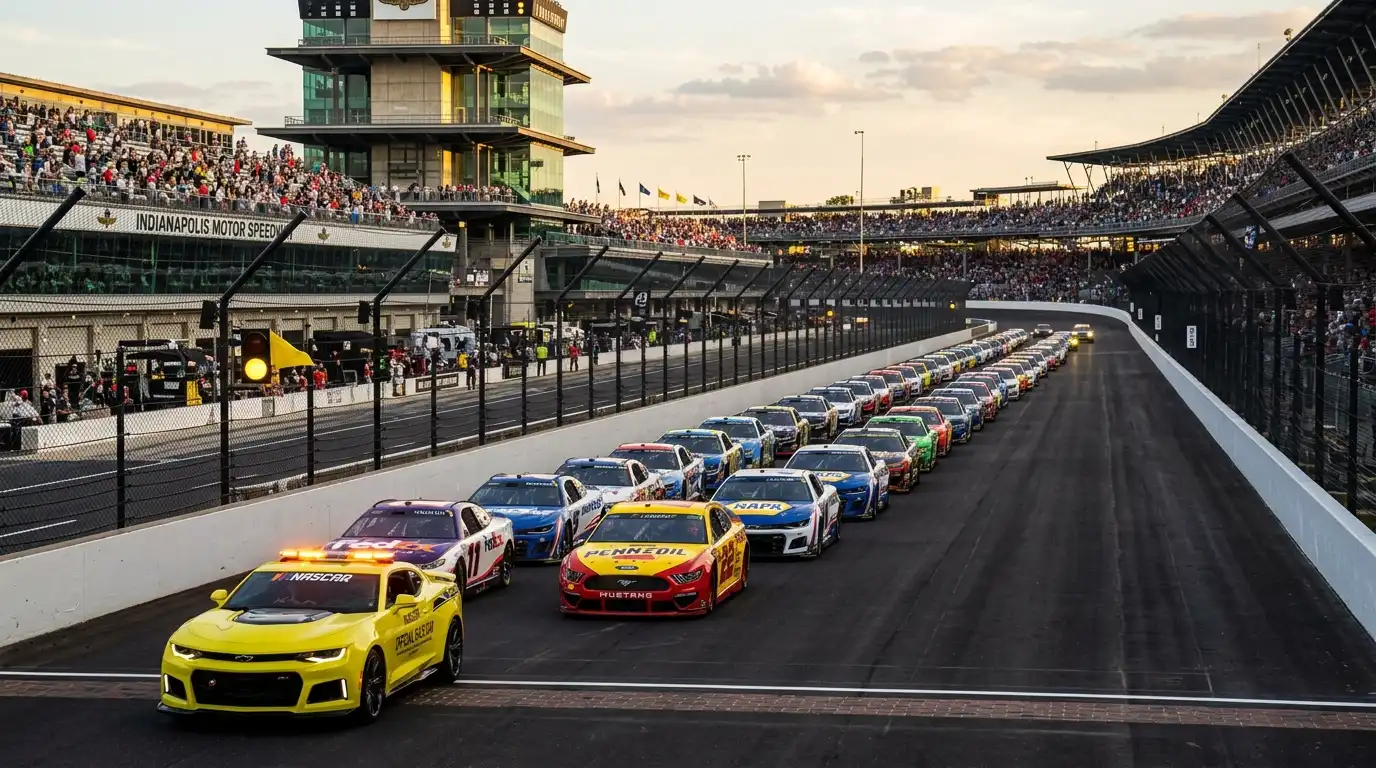
In high-stakes motorsports, momentum is everything. Yet in modern NASCAR Cup Series competition, green-flag battles are increasingly interrupted by sprawling, multi-lap caution periods that turn pulse-pounding stock car racing into a agonizing crawling parade. As yellow-flag stretches regularly push past the 15- to 20-minute mark, drivers and fans alike are reaching a breaking point.
1. The Boiling Point: What Happened at the Brickyard
The controversy surrounding extended caution periods reached a crescendo during the recent Brickyard 400 at Indianapolis Motor Speedway. At a iconic 2.5-mile venue where track time under green is prized above all else, caution flags devoured a staggering 27 laps out of the 160-lap scheduled distance.
Most frustrating to viewers was the timing. When incidents occurred within five laps of a scheduled stage end, routine cleanups turned into marathon pacing sessions. Stage 2 ended under an eight-lap caution that dragged on for nearly 20 minutes of real time. Instead of watching drivers aggressively duel for crucial playoff points, fans were left watching a slow-moving procession while television coverage cycled through extended commercial breaks.
Driver frustration has boiled over both inside the cockpit and across industry media. Veteran drivers like Denny Hamlin have publicly criticized the “painfully long” yellow-flag lulls, warning that extended downtime drains race intensity and alienates casual television viewers who demand fast-paced entertainment.
2. Deconstructing the Yellow Flag: Why Do Cautions Take So Long?
To understand why a simple spin or minor debris cleanup can halt a race for 15 minutes, one must examine the complex web of procedural rules NASCAR executes during every yellow-flag sequence:
- Field Freeze and Wave-Arounds: When the caution flies, race control must immediately freeze the scoring field, establish the official order, and determine which cars qualify for the free pass (the “Lucky Dog”) or wave-around procedures.
- Staggered Pit Road Opening: To prevent pit lane overcrowding and ensure safety, pit road opens on separate laps—first for lead-lap cars, and then on the following lap for lap-down vehicles. On a 2.5-mile track like Indianapolis or Daytona, a single lap under caution takes over two minutes to complete.
- The Choose Cone Bottleneck: Introduced to add tactical excitement, the “Choose Rule” allows drivers to pick their restart lane (inside vs. outside). However, making this choice requires a dedicated lap where drivers align in single file behind the pace car before reaching the Choose V on the track.
- Broadcast Commercial Requirements: Trackside operations must sync with network television partners to guarantee mandatory commercial inventory is aired before returning to green-flag action.
3. Stage Breaks Under Fire
While safety-driven cautions for heavy wall impacts or fluid on the track are universally accepted, artificial stage-break cautions remain the primary target of fan and driver criticism.
Originally introduced to guarantee commercial breaks and reward mid-race consistency, stage breaks inherently interrupt the natural flow of long-distance endurance racing. When a natural incident occurs just before a stage conclusion, the two cautions overlap, resulting in compounding delays where cars circle at 55 mph for up to 10 consecutive laps.
With top drivers like Kyle Larson pointing out that overall race broadcast times can stretch past three hours due to dead time, the motorsport community is calling for a complete re-evaluation of stage caution necessity—especially on road courses and short tracks where green-flag momentum is paramount.
While safety-driven cautions for heavy wall impacts or fluid on the track are universally accepted, artificial stage-break cautions remain the primary target of fan and driver criticism (as analyzed in RACER’s report on NASCAR’s caution length evaluation).
4. NASCAR Responds: What Solutions Are on the Table?
Recognizing the mounting discontent across the garage and fanbase, NASCAR leadership has publicly acknowledged the problem. Speaking on the official Hauler Talk podcast, NASCAR Vice President of Racing Communications Mike Forde addressed the issue directly:
“If NASCAR fans are angry at the length of caution periods, I can promise you that NASCAR matches that displeasure. We want green-flag racing, and we want to get it as fast as possible.” — Mike Forde, NASCAR VP of Racing Communications
According to Forde, sanctioning body officials initiated formal internal discussions during the Brickyard 400 to evaluate procedural changes aimed at tightening yellow flags. Several key adjustments are currently under consideration:
| Proposed Change | How It Shortens Caution Time | Implementation Feasibility |
|---|---|---|
| Relocating the Choose V | Moving the Choose Cone location earlier on track allows drivers to pick lanes and restart immediately, eliminating a full lap under yellow. | High (Track-dependent) |
| Combined Pit Road Openings | Opening pit road simultaneously for all competitors on shorter ovals cuts out an entire pacing lap. | Moderate (Safety evaluation required) |
| Accelerated Stage Restarts | Streamlining the transition between stage-end green-checkered flags and the subsequent restart. | High (Requires TV broadcast coordination) |
| Quickie Cautions | Restricting pit road access during minor debris cautions to get cars back to green within two laps. | Moderate (Impacts team pit strategies) |
5. The Strategic Dilemma: Balancing Safety, Showmanship, and Strategy
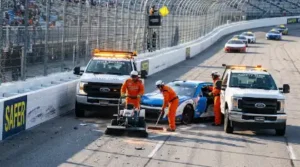 Streamlining yellow flags sounds simple in theory, but NASCAR faces a delicate balancing act. Stock car racing relies heavily on strategic pit decisions, fuel windows, and tire management—all of which are heavily influenced by how caution laps are handled.
If NASCAR rushes safety crews or eliminates the Choose Cone, it risks compromise in competitor safety or driver restart fairness. Conversely, doing nothing risks alienating a modern audience accustomed to non-stop action across competing sports and digital media formats.
Final Thoughts: The Path Forward
NASCAR’s admission that caution lengths have become a systemic issue is a crucial first step. In an era where racing fans expect maximum green-flag value for their time and ticket investment, streamlining track procedures is no longer optional—it is essential for the sport’s continued growth.
Whether through shifting the Choose Cone, refining stage mechanics, or coordinating tighter broadcast windows, the message from the garage is crystal clear: turn off the yellow lights and let the drivers race.