1. The ZEV Mandate Pressure Cooker
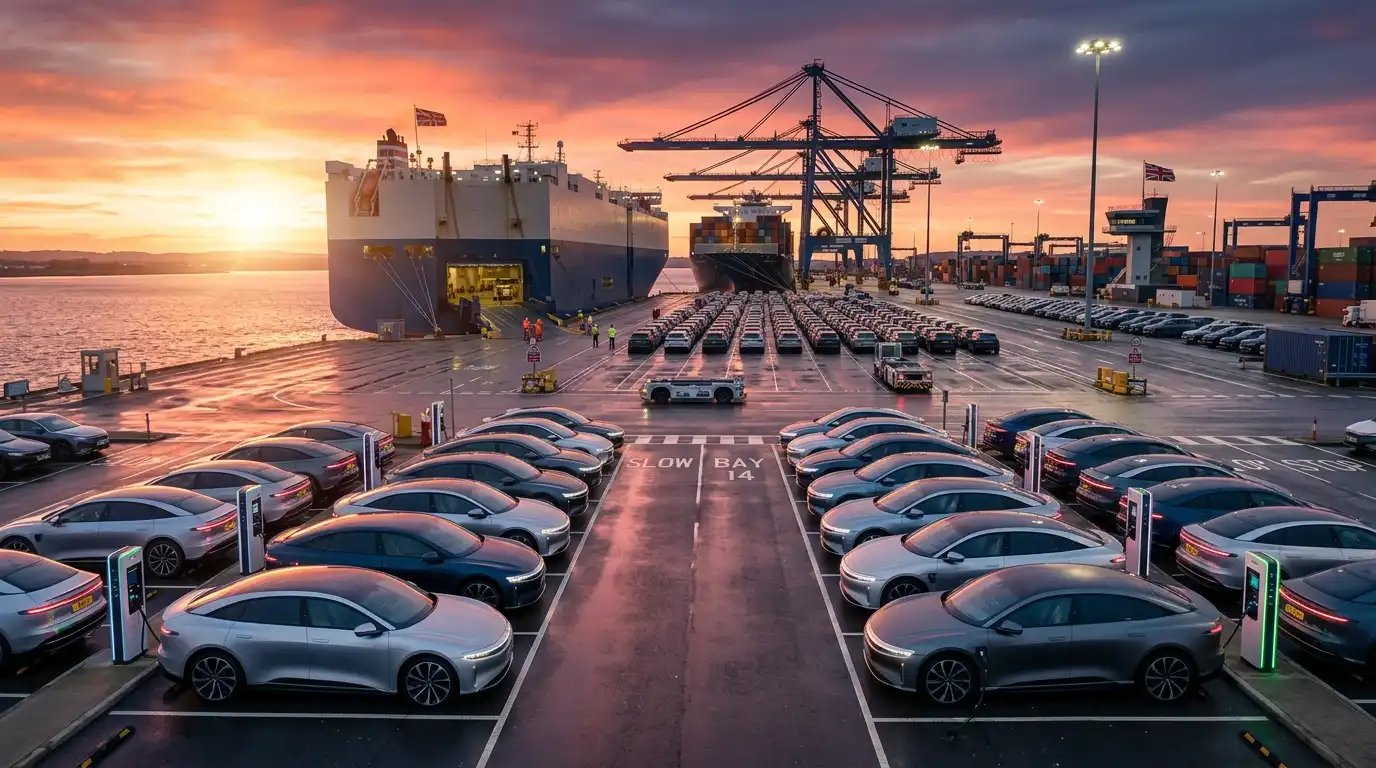
Introduced to enforce a gradual transition toward net-zero road transport, the UK’s ZEV mandate imposes escalating annual sales quotas on car manufacturers. Automakers must ensure that a rising percentage of their new car registrations in the UK are fully battery-electric (BEV), backed by substantial statutory fines per non-compliant internal combustion engine (ICE) vehicle sold.
Manufacturer Compliance vs. Retail Market Demand
While corporate fleet sales and business lease adoption of electric vehicles have remained relatively steady due to favorable tax incentives, private retail demand has experienced notable friction. High interest rates, persistent inflation, public charging infrastructure gaps, and higher initial vehicle prices have made individual retail buyers hesitant to switch from gasoline or hybrid models.
To avoid severe regulatory penalties, legacy automakers have been forced to introduce aggressive discounted finance offers and self-registrations. According to operational market updates from the Society of Motor Manufacturers and Traders (SMMT), balancing regulatory compliance against organic consumer demand remains the single largest operational challenge for UK motor distributors.
2. The Rise of Chinese EV Brands in the UK Market
While legacy manufacturers adjust to regulatory penalties and margin compression, new automotive brands from East Asia are capturing significant market share. Companies such as BYD, MG (under SAIC Motor), Omoda, and Jaecoo have rapidly scaled their UK operations.
Vertical Integration and Cost Advantages
The primary competitive advantage for incoming Chinese brands lies in supply chain vertical integration. By manufacturing their own battery cells, electric motors, power electronics, and software platforms in-house, these manufacturers achieve cost structures that European competitors struggle to match. This enables them to offer well-equipped electric hatchbacks, crossovers, and SUVs at price points nearly competitive with traditional petrol-powered equivalents.
Rapid Dealership Network Expansion
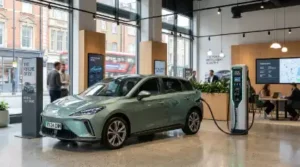
Rather than relying solely on direct-to-consumer digital sales models, many new entrants are aggressively partnering with established British dealer groups. By securing physical showroom space across England, Scotland, Wales, and Northern Ireland, these brands quickly build consumer trust, offer accessible test drives, and establish local post-sale service capabilities.
3. Impact on Domestic UK Car Manufacturing and Exports
The operational friction between ZEV targets and market share shifts extends directly to domestic manufacturing plants across Britain, including major facilities in Sunderland, Solihull, Cowley, and Ellesmere Port.
Retooling Factories for Electric Architecture
UK car factories are making multi-billion-pound investments to retool assembly lines for battery-electric platforms and hybrid architectures. However, maintaining high factory utilization rates requires steady domestic sales alongside robust export volumes to the European Union.
Regulatory frameworks such as the Department for Business and Trade policies regarding trade rules-of-origin for batteries and electric powertrains mean UK carmakers must maintain competitive local supply chains to avoid cross-border tariffs when exporting to continental Europe.
4. What This Shift Means for British Car Buyers and Industry Outlook
For the average UK motorist, the influx of foreign EV entrants paired with ZEV mandate price competition creates several clear market outcomes:
- Increased Market Price Competition: The arrival of feature-packed, lower-cost electric vehicles forces legacy brands to adjust pricing structures and offer lower APR finance packages.
- Broader Range of Electric Offerings: From compact urban commuter cars to long-range family SUVs, buyers have access to a wider variety of electric powertrains than ever before.
- Residual Value Volatility: Heavy discounting and rapid influxes of new inventory can create unpredictability in used EV residual values, impacting lease rate calculations and trade-in valuations.
The UK automotive industry is undergoing a foundational realignment. While the ZEV mandate sets strict policy parameters for decarbonization, the commercial reality is being written by international cost efficiencies, supply chain agility, and consumer price sensitivity. How established UK brands respond over the coming years will determine the future landscape of Britain’s motor trade.