1. Telemetry and Data Analysis: From Intuition to Engineering
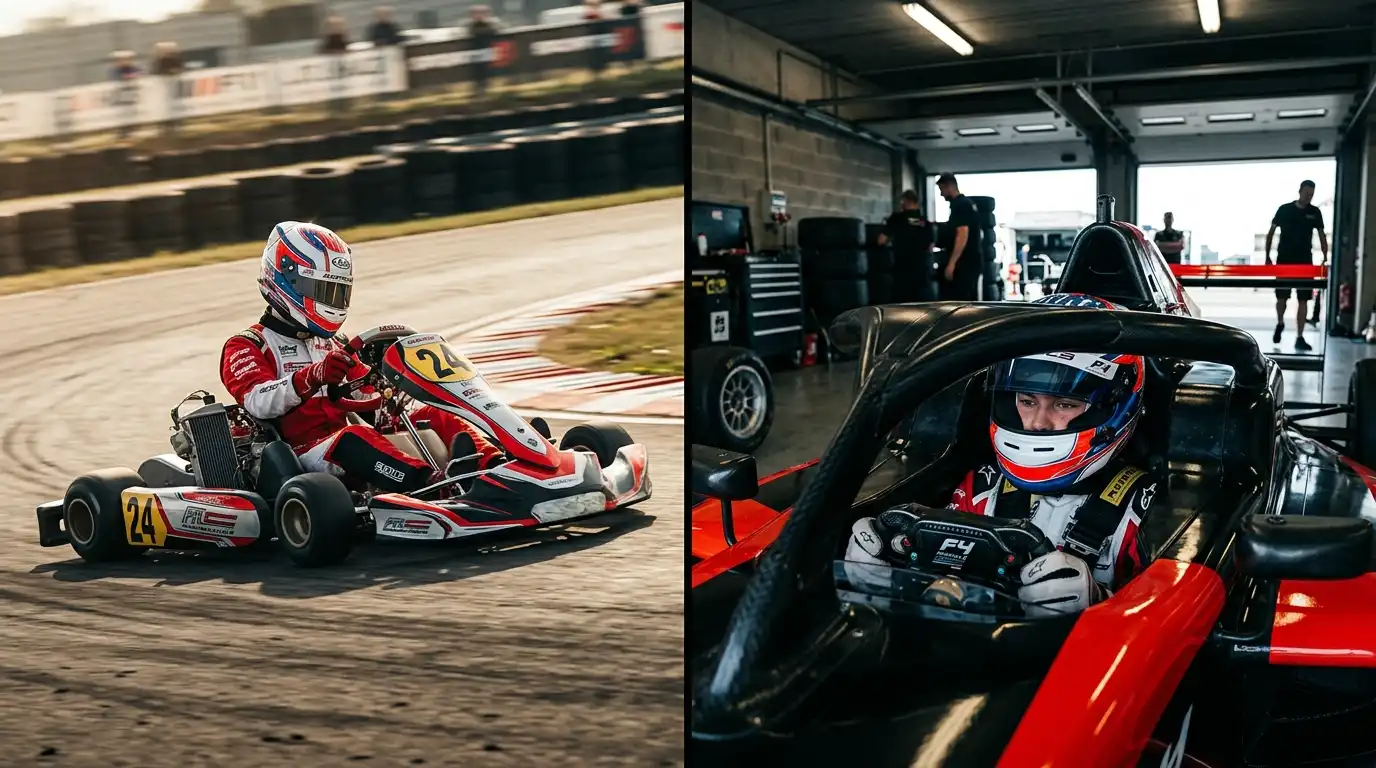
In karting, driving is almost entirely intuitive and tactile. Because karts lack suspension springs, dampers, and complex telemetry systems, drivers rely heavily on body weight transfer, seat flex, and seat-of-the-pants feeling to gauge grip limits. Feedback is delivered directly through the steering column without power assistance or electronic damping.
Transitioning into an F4 chassis requires drivers to translate their physical sensations into cold, hard data. Modern single-seaters are equipped with comprehensive sensor arrays logging channels like throttle position, brake pressure, steering angle, wheel speed, and suspension travel.
Rather than simply telling their race engineer that the car “feels loose,” a driver graduating to F4 must learn to read telemetry squiggly lines alongside engineers. For instance, understanding the correlation between progressive brake release (trail braking) and front-end mechanical grip becomes a vital tool in eliminating coasting time into corners.
To learn more about the technical framework of entry-level single-seaters, read through the official FIA British F4 Technical Overview detailing chassis construction and engine telemetry rules.
2. Aerodynamics vs. Mechanical Grip: The Braking and Cornering Shift
Perhaps the most significant technical adjustment for a driver moving from karting to F4 is learning to trust aerodynamic downforce. A kart relies purely on mechanical tire grip and chassis flex to navigate turns. If a kart driver goes faster into a corner, tire scrub increases and friction drops off sharply.
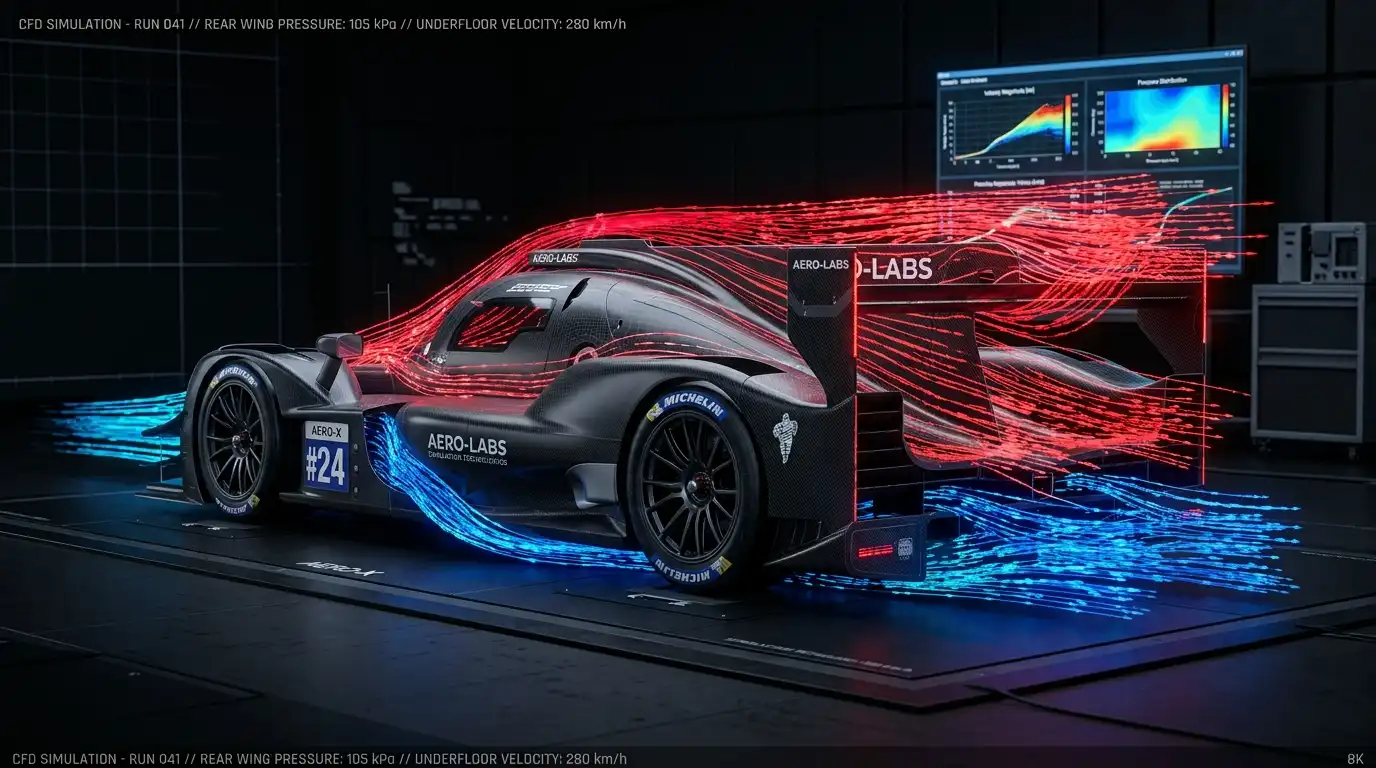
In contrast, an F4 car utilizes front and rear wing assemblies to generate significant downforce as speed increases. This creates a counter-intuitive reality for young drivers:
- High-Speed Trust: In high-speed sweepers, going faster actually pushes the car harder into the track surface, creating higher grip levels.
- Brake Pressure Peak: Drivers must hit the brake pedal with maximum effort initially at high speed when aero load is highest, gradually bleeding off pressure as speed drops and downforce bleeds away.
- Mass Management: Unlike a kart weighing under 100 kg, an F4 car with a driver weighs around 550 kg to 600 kg. Managing weight transfer during trail braking requires far higher precision to prevent lockups.
3. Physical Demands: Neck Strain, G-Forces, and Hydraulic Braking
While top-tier karting is immensely physical, the nature of muscle fatigue changes dramatically in a single-seater car. In a kart, drivers sit upright and use their upper body and arms to brace against lateral acceleration.
In an F4 car, the driver is positioned in a semi-recumbent, low-slung monocoque cockpit wearing a HANS (Head and Neck Support) device. The lateral and longitudinal G-forces placed upon the neck during heavy braking and high-speed cornering can easily exceed 2.5G to 3G. Without targeted pre-season neck isometric training and core strengthening, a 15-year-old rookie’s head will drop toward the side of the cockpit by mid-race, leading to fatigue and diminished vision.
Additionally, the brake pedal in a single-seater requires massive hydraulic pressure. Drivers must exert tens of kilograms of force with their left leg on every deceleration zone while maintaining fine modulation to avoid flat-spotting expensive slick tires.
To understand how governing bodies structure entry rules and age limits for junior categories, review the official FIA Formula 4 Certified Guidelines.
4. Racecraft and Operational Discipline

Racecraft in karting is famously aggressive, characterized by late lunges, wheel-to-wheel rubbing, and constant positional battles on short, tight circuits. In single-seaters, open-wheel contact carries immediate, disastrous consequences—from broken suspension wishbones to airborne launches.
Young drivers must develop a heightened sense of spatial awareness and discipline. Beyond wheel-to-wheel etiquette, F4 introduces complex operational duties:
- Managing clutch paddles and standing starts on a full grid.
- Managing tire thermal degradation over a full 20-minute race distance.
- Executing radio communications with the pit wall regarding car balance and flag conditions.
Conclusion: Bridging the Gap for Future Champions
The jump from karting to F4 is much more than a step up in speed—it is a driver’s initiation into professional motorsport. Success depends on how quickly a young talent can combine raw driving instinct with physical endurance, aerodynamic understanding, and rigorous telemetry analysis. Drivers who master this bridge in F4 set the foundation for a successful rise through F3, F2, and ultimate single-seater stardom.